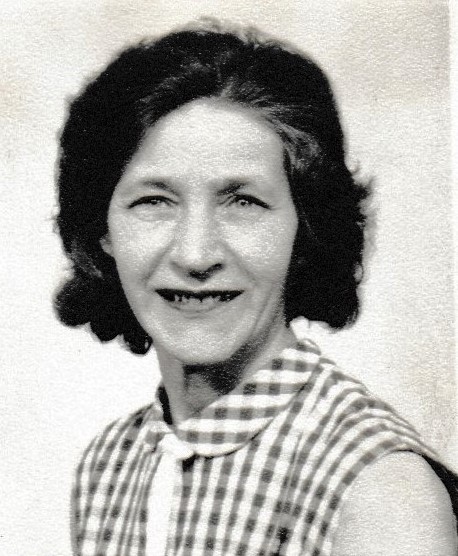
Florence Smith
Florence Smith
We alighted in West Cornforth from Wheatley Hill in about 1955. My family had lived in my great grandmother’s house until her death, and it was now that my mother was to fulfil her ambition of opening a baker’s shop. So it was that we moved to the empty premises at 24 High Street.
The property was a two up, two down terrace, the front, downstairs room being a shop with rather narrow, double fronted display windows. The back room served as living room cum bakehouse.
On the first day of opening I arrived home from school to find a few pies rather forlornly displayed in one of the windows. My mother, known to all as Florrie, had baked them in a domestic oven. This arrangement continued for some time until my dad, who was a bricklayer by trade and regularly suffered from winter-time ailments, decided to “help out” when recovering from another of his bouts of bronchitis. He built a bakehouse at the back and installed a large, commercial oven. The day it arrived the gossip among my schoolfriends was that we had acquired a gorilla in a cage!
From then on, the business took off. Mother served in the shop and was the assistant baker taking charge of the recipes and weighing out the ingredients. My dad developed the range of items as his skills developed.
Saturdays saw colourful displays of cakes and pastries. Behind the glass covered counter lay row upon row of individual cakes. The varieties were legion, and in addition there were various sweet and savoury pies and breads – all produced by two people.
Battenberg slices Fruit cake slices
Butterflies Fruit tarts
Cauliflowers Meringues
Chocolate boxes Peach Melbas
Chocolate marshmallows Pineapple topped shortbreads
Chocolate snowballs Raspberry splits
Chocolate teacakes Sponge drops
Cream puffs Sponges – coffee and walnut,
Crèam slices jam and cream, lemon,
Currant slices orange, chocolate.
Date slices Vanilla slices
Eclairs
Friday was pea and pie day. Enamel buckets full of mushy peas were made to accompany the individual meat pies, for which queues often formed down the street.
The bread “proofer” was a converted single wardrobe with a gas ring in the bottom which heated a pan of water to produce the necessary steam.
Sundays and Mondays were days off. We didn’t have a washing machine, so on Mondays Mother used her posser to clean the clothes in the kitchen sink. Sheets were boiled in a gas-fired boiler, and the flat iron was heated over the cooker gas ring.
Occasionally, they had a day out. My bicycle arrived one Monday. Mother had bought it in Durham Market and had ridden it home, calling in at a garage on the way to have the seat lowered so she could reach the pedals.
We really hit the big time with the acquisition of a shooting-brake. Neither of my parents had taken the driving test. On the way to visit my Grandmother in Thornley, my mother stalled in the middle of the crossroads and was hit by another vehicle. No-one was hurt, but the shooting-brake was disposed of soon afterwards.
The evening the Coop opposite caught fire we were sitting watching the television and had absolutely no idea of what was happening until our next door neighbour, Dorothy Tinkler, threw a stone at our window to alert us. By this time the flames were reaching to the sky and several fire engines were assembled in the street. My mother opened up the shop and distributed cups of tea to the firemen.
The day we left West Cornforth was June 15th, 1963. I was devastated. My dad had poor respiratory health, and the doctor advised that we move to the cleaner air of the west coast, so the shop was sold to Trimdon Bakeries. We ended up with a small hotel in Blackpool, which my mother and father ran for a number of years before opening another bakehouse catering for the hotel industry. They retired to North Shore in Blackpool before heading back to County Durham. After my dad’s death in 1993, my mother lived in Eyam in Derbyshire, until her death in 2014.
Lynn Spreyer
Leam
Derbyshire
June 15th, 1963. Dorothy Tinkler standing in the shop doorway.
Gladys Thirlaway nee Rossiter My Mam
Mrs Gladys Thirlaway was born Gladys Rossiter in West Cornforth on Friday 13th February 1914. I am not sure if the birth was straightforward or complicated but I do know that one of the ladies who attended my Grandma Bella made the following remark when the newborn Gladys coughed up a cup of blood “Bella you’ll have to get that bairn christened quickly, she’s not long for this world!” How wrong could she be! Gladys became part of a large family (not for those days) comprising elder sister Jenny (Jane), elder brother Freddie and in due course younger sister Beatie (Beatrice) and younger brother Tommy (Thomas).
Life was hard in those days (not just a cliché) but the family was built on a firm foundation of Methodist Christianity as preached by the Ministers of the New Connexion, Ryhope Street Chapel. Hard work and the value of education were held to be cardinal virtues and all of the children were regular attenders of the Public Elementary School. Diligence and good behaviour were the order of the day enforced by a reputedly somewhat tyrannical headmaster, a certain Mr Summerbell.
After leaving school aged 14, employment opportunities for young ladies were rather limited in the colliery villages of County Durham but the situation was probably typical of the whole area. Employment for girls was to be found in the retail sector (local shops) or in the houses of the well-to –do as a servant. It was as a servant that the young Gladys eventually found employment. The problem was that the south Durham Coalfield was not awash with middle class households eager to employ servants and so to gain work Gladys had to move away to the genteel spa town of Harrogate in North Yorkshire. Her time there working in an “upstairs, downstairs” environment left a lasting impression upon the young Gladys. I’m sure that her fastidious insistence upon good manners and in particular correct table manners stemmed from this part of her life. I also suspect that her love of cooking and baking, if not initiated at this time, was certainly reinforced by her time in service or “at place” as she always referred to it.
I think some of Gladys favourite recipes may have been learned in Harrogate and as a child I always loved the cheesecake that she made with sour milk and currants. Years later I tasted poor imitations in various establishments and noted that they were called Yorkshire Curd Cake. To this day I find it a little galling to think that one of my favourite homemade delicacies had its origins in that large county on Durham’s southern boundary – but there you go.
I know that Gladys’s time in Harrogate left a great impression upon her and she always spoke with great affection of this elegant town and in particular of the beautiful open parkland area known as THE STRAY. She would often say “you know it’s just like being at the seaside except there’s no sea”. When we acquired a car in the early 60’s Gladys made sure that Harrogate was top of the list of places to visit. My dad took her on her own without the family and I think it must have been a very emotive experience for her.
I don’t think all of the young Gladys’s time was spent away in Yorkshire but her visits home were full of joy as she came from a close knit family. She was often teased her about her good looks by her older brother Freddie.” Freddie used to call me, the flirt” she told me on one occasion her eyes twinkling and a smile on her lips as if she remembered the joke from yesterday.
Her life was not without sorrow and tragedy struck unexpectedly on Monday 28th January 1929. Gladys was to visit her beloved brother Freddie who worked as a bus conductor on the Spennymoor to Stockton run for Wilkinson’s, to take him his “bait” (One of her regular tasks). He had been standing on the rear step checking for late arrivals when his head was struck by a red cast iron traffic sign and he was killed instantly. Anyone who has lost a child or sibling will know the impact this incident had on the family. As a child, visiting Grandma Bella’s home forty years later, I couldn’t help but notice Freddie’s photograph in pride of place displayed in a huge black oval frame. I am almost certain that what saw Gladys and the Rossiter family through this tragedy was their strong Christian faith and their regular attendance at Chapel where Gladys became a valued member of the congregation and was presented with a Bible on November 21st 1937.
1937 was a momentous year for the Rossiter family and for Gladys in particular. There was the coronation of George VI and Sunderland AFC beat Preston North End 3-1 at Wembley to bring the F.A.Cup to County Durham for the first time. More importantly Gladys met and married my dad, William Laverick Thirlaway and settled down to life as a coal miner’s wife. I’m sure it was a love match as I remember being told that my dad had told his best friend Dickie Blackwell “that’s the girl I’m going to marry” upon setting eyes on her even though she was walking out with someone else at the time (Tommy Cowans).
The newly weds set up home in Balaclava Street and on 27th August 1939 just a week before the Second World War was declared , my brother Lawrence was born. This was at 14 Mechanic Street the home of Grandma Bella. No midwife was called when you have a mother like Isabella Rossiter. The young family made it through the war years, dad employed at Thrislington Colliery and doing his bit in the Home Guard under the command of the redoubtable Colonel Rickison.
One incident in particular shows the strength of character of Gladys (reputedly 5 feet tall.)It involved a coal shovel. The lady living next door had purloined Gladys’s new shovel and had painted it pink to pass it off as her own but Gladys was undaunted and drew herself up to her full height and ….”Now Mrs B……., you know very well that’s my shovel and you painting it pink doesn’t make a scrap of difference”. Needless to say the shovel was returned and the families remained friends until the street was demolished and the families housed elsewhere in the village.
Sunday 7th March 1948 – what a day. I came into this world at 20 Balaclava Street, not perfectly however as I had a large bump on my neck but it was soon sorted. Incidentally the weather was so cold in April of 1948 that the snow was too deep to get me safely to Chapel so instead the Minister came to us and I was christened at home.
1953 brought a new era with the coronation of Queen Elizabeth II and the family moved to 16 Maple Grove, a modern pre-fab bungalow with a fridge! Gladys thought the house was cold but the children were spoiled with home-made lollipops on hot summer days. One of my abiding memories of Coronation Day was the street party with races, party food and a fancy dress competition. Gladys was dressed as a gypsy and looked beautiful. The judges thought so to and she won a rolling pin. After leaving the pre-fabs it wasn’t until thelate1960s that we acquired our next fridge, bought from the factory in Spennymoor.
The 50’s, 60’s and 70’s rolled by and saw my brother and I settled in our chosen careers. I’m sure that Gladys’s high expectations subtly disguised with “a just do your best son” propelled us along the road to becoming worthwhile citizens … well almost.
During this period Gladys religious affiliation shifted. When the New Connexions Chapel closed in the late 50’s she became a member of The Salvation Army. Lawrence and I both attended Sunday School and Lawrence went on to become a member of the band and he and his wife Edna are currently mainstays of the current corps of West Cornforth Citadel. The Army became a wonderful format for Gladys to practice her form of Christianity and she became an extremely positive member of the corps. She enjoyed their “up and at’em” brand of worship, their meetings and raising money for good causes. Well into her 70’s she was still collecting door-to-door in Cornforth and in the surrounding villages. Her appetite for work was prodigious. Along with her good friend Mrs Violet Ward she spent endless hours baking cakes and other delicacies for Salvation Army Fairs. The Army also provided wonderful opportunities for fun with many a Home League meetings and trips away.
I am sure it was this positive faith and commitment which helped Gladys deal with the second great tragedy of her life – the death of her husband William (Billy) on 20th February 1981. She was heartbroken but didn’t wallow in self-pity; she picked herself up and got down to doing things for others. Like other ladies of her age and indeed like I do, she took great pleasure in the company of her children and grandchildren. She always praised their achievements and overlooked their transgressions as only a favourite Grandma can! I recall one incident as our girls were dressing to go nightclubbing in all their finery. She was in their room discussing shoes, earrings, make- up etc. and if only she could have gone with them she would have been off in a flash.
At the age of 73 she entered a new phase in her life. Arthur, a Rossiter cousin from Pennsylvania visited and this led to a lasting friendship between Gladys, and Nanci who is Arthur’s daughter-in-law. They became such good friends that she was invited to Tidioute in Pennsylvania to stay with them. Thank goodness for Lawrence. He organised everything and at the age of 73 Gladys Rossiter (a little bit like Paddington Bear) flew off to Toronto on her own. Once there she was met by Nanci and Bill and shown the wonderful sights before being whisked off to the backwoods splendour of Tidioute. She adored being there, sitting in the outdoor hot tub in her newly bought swimming costume and riding with Bill on an evening when they would shine spotlights on the herds of wild deer and the occasional black bear. Nanci had been a librarian in her local school that catered for all ages and once introduced the children soon learned to love Aunt Gladys from England. Many continued to write to Gladys constantly asking when she would be returning.
She did get to return in 1994 and this time Nanci took her for the holiday of a lifetime. They flew from Pittsburgh out to Los Angeles and travelled back towards Pittsburgh on the Amtrack Railroad (a la Billy Connolly). Along the way she visited Disneyland California, the Universal Film Studios and Las Vegas and yes, she did find her way to San Jose! She brought back some little plastic money tubs from Vegas and admitted to having a go on the bandits but made us promise not to tell the Army Captain. Our whole family are so glad that Mam got to make those trips because as she moved into her late eighties her health began to fail. Nanci proved to be such a wonderful person that she came over for two weeks just to be with Gladys – not for a holiday but just to help her.
Gladys kept going in her bungalow as long as possible, ably supported by my brother Lawrence and his wife Edna with the rest of the family filling in around the edges. Eventually as dementia took an even stronger grip she went into a care home in Fishburn and then into Tenlands in Ferryhill. It was a bitter sweet time for us all as we rallied around to make sure that she had at least one visitor every day.
Even with her memory shot to ribbons, I felt she was unconsciously helping us to do “collateral good” because while we talked to her we got to talk to other people who may not have been visited that day. Some were total strangers but others were Gladys’ friends from the village – Mrs Kadja (Minnie Lowther) and Mrs Dunnett who lived next door to us when we lived at 2 The Oval. On one occasion, much to my surprise, she fished out of her handbag and gave me an old photograph of me, aged eleven complete with my Diana 15 air rifle. Even towards the end of her life Gladys was spreading her magic -helping us to bring cheer to others almost by accident.
My favourite memory is of the day I spent with her, my eldest daughter Catherine, her son Matthew and her daughter Grace. It is a particularly poignant memory as shortly afterwards on February 23rd 2008 my mam died holding Catherine’s hand, while we attempted to travel back from South Africa where we had been visiting Joanne my youngest daughter’s in-laws. It was almost as if my mam had passed on her strength and wisdom to Catherine and in a tragic twist of fate how she needed it as her own son, my grandson, Matthew died aged 11 on Friday4th November 2011.I like to think that they are both together enjoying eternal peace and joy – “Promoted to Glory” to use my brother Lawrence’s words.
I’ve since seen the words that I think perfectly sum up Gladys – My Mam, on another lady’s headstone in St Peter’s Church, Wolviston:-
“an extraordinary ordinary lady”
Graham Thirlaway July 2016
Madge Dodds
Madge’s husband came to West Cornforth from Barnsley when he was eighteen. He came to West Cornforth with a shot gun and a fishing rod. He worked at the pit and was an excellent fisherman. When he wasn’t at work he was fishing, and when he wasn’t fishing he acted as game keeper at the wood and helped out on Rickinson’s farm. The additional work provided food for their family of six.
Tommy has a clear memory of being on the farm. Jack Ormston had a hanger there for his plane. One day Tommy was with his father when his dad was helping Jackie get the plane out of the hanger. Jackie gave Tommy and a little pig a flight round the field. A flying pig in Cornforth.
Madge and her husband had five daughters and then Tommy. Older than Tommy, his siters, like many village lasses, had to move out of the area for work. Two went to Leeds, one to Crawley, one to Blackpool and another to Surrey. Madge went to visit her daughters in the south. The journey took two days.
Madge worked at home raising her family. Work at home was hard. Madge was house proud. One job Tommy remembered her doing was cleaning the brass fire irons every week.
Madge’s father had married twice and Madge had a step mother and step siblings.
Madge was widowed in 1947 when her husband was killed in a mining accident at the pit.
Her husband’s death hit her hard. Her husband was buried under a tree in Holy Trinity Church. Rain, hail or blow every Sunday Madge took Tommy to her husband’s grave where his mother talked for hours to her dead husband. Clearly heartbroken, this weekly ritual disturbed her young son but they never discussed it.
Money was tight. Madge lived on the minimum permanent relief as compensation for her husband’s death with an additional two and sixpence for Tommy. Tommy can remember his mother asking him to go and see his grandfather who had a greenhouse. His grandfather gave him tomatoes to supplement their diet.
Madge never had spare money and hoped, when her father died that she would be able to cash in an insurance policy that she had paid into on her father before he remarried. Cashing it in required her step family to sign and for whatever reason they failed to do so.
Madge died in the mid 1950s.
Tommy Dodds July 2016
Gwen Dodds
Gwen was born in … Her father … had been a prisoner of war in the first world war. During the second world war he carried out duties as part of the home guard.
Gwen met her husband Tommy at a dance and walked her home to …. Standing talking at the garden gate her father came out of the house and made a noise rattling the empty milk bottles he was putting on the door step.
Gwen worked at Bennett’s Grocers which was opposite the school.
When Gwen got married he got out his bowler hat and spent a long time dusting it in the honour of the occasion quietly letting tommy know exactly how he expected his daughter to be treated.
Gwen and Tommy were married on …. at …. The happy couple started married life in ….. and had two son’s John and Stephen. Tragedy struck when Stephen was knocked down and killed. Gwen and Tommy were distraught. Gwen was quite fragile and the doctor advised her to get out and about. Gwen went to work at Smart and Brown’s. Gwen enjoyed her time there but when the opportunity to take redundancy came around Gwen decided to take it. Gwen’s redundancy money made it possible for them to take their son John on a very special holiday to Florida.
After the pit closed in 1967 Gwen and Tommy took the opportunity to start a much needed Youth Club in the Miner’s Welfare Hall (by this time the West Cornforth Community Centre). Team Dodds was a force to be reckoned with.
To say the Youth Club was much needed is an understatement. It was one of the most popular regular events at the Community Centre. Posting Gwen’s picture on the Cornforth History Page led to a number of postings from past Youth Club members who remember her with gratitude, respect and much love.
‘Sadly missed and greatly loved. Loved the youth club. Nowhere else to go in my day. Total legends Gwen and Tommy. Amazing couple. We loved going to the youth club. She (and Mr D) are the reason I do the job I do today. Xx Many a happy memory of being thrown out of the youthie by gewn, she took no crap off us and all forgotten the following week, after you begged for forgiveness that is. We had the best of times at the youthie thanks to gwenie. Simply the best, The youth club with their record player with such 80s’ classics as Wham & A-ha lol! Me and a friend getting a special award off them at the Christmas Dance for working at the tuck shop. I remember the discos with Gwen doing them they lived in the same street.’
Jean Sweeting
Jean was born on the 5th August 1923 in Sacriston, the adored only child of Julia and William (Bill) Foster. The small family moved close to Kimblesworth Colliery where her dad was a blacksmith. He described her as the ‘best lad he never had’. A Saturday cricketer and avid sports’ fan he and Jean were soul mates. Jean attended the local school and then Durham Girls’ Grammar School.
The day war broke out Jean travelled home from her grandmother’s in Huddersfield to start her last year of school. After school her plan was to train as a secretary, but her head mistress suggested teaching. Sport was Jean’s first love. Training to teach was costly and training to teach PE took three years, a year longer than other teacher training at that time. Sensitive to her family’s situation Jean chose two years teacher training with Art as her main subject and was accepted at City of Leeds College. The college buildings were requisitioned as a military hospital and the students relocated to Scarborough where they were housed and taught in hotels. Neighbouring hotels were used as RAF training schools. Jean enjoyed her time in Scarborough very much.
When she qualified Jean taught PE in a boys’ school in Easington; she was in her element.
Living with her parents who had recently moved to Framwellgate Moor most Saturdays would find Jean at the dance in the Three Tuns in Durham. It was there that she met her bonny Doggie lad; George Sweeting. When George told Jean that he lived in West Cornforth she asked ‘Where?’
George and Jean were married on the 14th August 1948 in St Cuthbert’s Church, had the reception in The Garden House Durham and honeymooned in The Lake District. They came home to live above their shop in West Cornforth where they stayed for almost forty years.
Jean stopped teaching when her children were born (Julie in 1949 and Jackson in 1951) but it wasn’t long before she was back in the classroom. Jean was able to return to teaching in Cornforth because friends in the village looked after the children and helped with the housework. Jean loved every minute of her teaching; Cornforth kids were something special.
Each evening at half past nine with George at the Vic, and the miniscule Ekko TV on in the background Jean settled down with a cigarette to do her marking.
Saturday afternoon the shop shut, fish and chips from Swalwells and then off to Stockton. Back home by 5 o’clock so that Jackson could watch the Lone Ranger. Sunday’s treat was a Brown Ale shandy with our dinner and later in the afternoon Bolton’s ice cream. Jean always had a chocolate wafer sandwich with a flake through the middle.
There was always something to do; the WI, Badminton and the Thursday Club all had diary entries. As well as teaching Jean helped in the business, making trifles, packing pots and when she passed her driving test she was called upon to deliver orders and go to the cash and carry.
When the pit closed in 1967 George persuaded Jean to become secretary of the newly formed Community Centre. Jean started a keep fit class there on Tuesday evenings, George played snooker and afterwards, no children at home, they went to the Thinford together with their friend Joyce, for the last hour. Mum and dad’s friends; Joyce and Madge were widowed but they all continued to go out together with Jean and George. Saturdays usually saw them all at the dance in the Community Centre and they holidayed together too.
George and Jean retired to Sedgefield but continued to return regularly to Cornforth. They were fantastic grandparents. George died shortly before their forty fifth wedding anniversary and her seventieth birthday. Jean was devastated; her diary read ‘George gone’; she said it felt as if she was ‘a ship without a rudder’. Her friends rallied round. That summer by some miracle they got a place for her on a Scarlet Band Trip to Italy and she celebrated her 70th birthday among friends in Venice. Jean continued to go to the Saturday dances, enjoyed other lovely holidays with ‘Blenkies’ and special friends from Cornforth.
Jean moved to Darlington to be closer to her family and celebrated her 80th and 90th birthdays with Cornforth friends, family and the new friends she had made in Darlington. It was good that so many friends were able to come to Darlington from Cornforth for her funeral in November 2016.
What was Jean like as a person? Jackson paid tribute to her at her funeral. Mum, nana, great nana, Jean and to some of my sister’s friends, The Duchess (but not sure if she ever knew that)! This list is in no particular order!
Loved a party and was up till 4 am on New Year’s Eve at the age of 91!
Loved getting dressed up, and wore a necklace most days.
Loved shopping. Even at 90 in Binns after trying on an outfit for her birthday, she stood like a super model in the doorway of the changing room
Still had her toenails painted when I last saw her
Loved my Dad and Butch very much, not always in that order
Loved football, especially Newcastle Utd, but not so keen on Sunderland! Enjoyed phoning after a match to dissect the game and there has been lots to talk about over the last couple of years!
Loved a party!
Enjoyed a G & T
Liked the Rington’s man, Alan, delivering every week
Drove until she was 80 and loved cars.
Bought herself an Audi Coupe when she retired
Had her AA badge in pride of place on the wall
Still had her college blazer hanging up in the wardrobe.
Took great pleasure in her grandchildren and great grandchildren.
Always had boxes full of biscuits even though…’I am diabetic, you know’
Great at puzzles and quizzes and everyone wanted her on their team
Always played for the staff cricket team against the kids when she was teaching
Played hockey, tennis, badminton and golf when she was younger
Loved decorating Easter eggs
Her Easter and Christmas window displays in the Butcher’s shop were excellent
Was an avid reader
Enjoyed company but we all knew when it was time to leave
Loved her family very much as we loved her
She would have loved to see me in a suit and tie today.
And never forget … she loved a party.
Jackson Sweeting and Julie Leitheiser July 2016
Jenny (nee Iseton) Walker
Jenny’s mother had come to West Cornforth from Sedgefield to be a maid for Mr Roberts the vicar. Her husband to be lived with his parents at Church View Cornforth. Jenny’s mother and father lived in a cottage below the lazy line in West Cornforth. Jenny was born in 1930.
Jenny was delivered by Nurse Nash. When Nurse Nash told Mr Iseton that he had another healthy daughter to add to his family of two girls and a boy he said that she would be his last child. Nurse Nash said that decisions like that would make her services unnecessary but Jenny’s dad made it clear that his family of Margaret, Lily, Jim and now Jenny was complete. There would be no more children.
Most babies were born at home with the assistance of a midwife. When Nurse Nash had a day off her work was covered by Nurse Hughes or Nurse Ross who lived at Park Hill.
The family moved from the cottage to Frosterley where they lived for three years. When they returned to West Cornforth they moved into New Road Terrace. Life in New Road Terrace was one of routine. Each Saturday Cis Egglestone came to collect the doctor’s money (in the days before the national health service people had to make private insurance arrangements for the cost of medical care). Cis always came at dinner time and usually accepted the invitation to share the family’s meal of onion pudding, minced meat, tatties and turnips.
Jenny went to the new school in West Cornforth and to the chapel and the youth club. Her close friends were Edna Lynch, Lily Stokoe and Alma Close. One of her earliest memories is being taken to Sunday School by her father after dinner on Sunday afternoon. Jenny and her dad walked from New Road Terrace along the bottom lane to the bottom of The Green which was where the church hall was. Jenny’s dad would check out what else would be walking their way home and ask then to see Jenny got back safely.
Jenny’s mother took ill when Jenny was twelve years old. Doctor Moffat diagnosed and treated her for congestion of the lungs. Unfortunately the diagnosis was incorrect; her mother had a kidney complaint that had not been identified and was therefore not treated. Sadly Jenny’s mum died aged fifty five in 1942.
Jenny’s grandparents had moved to Guiseley but came to visit every Sunday afternoon. Lily made the dinner and Jenny baked for tea. At this time the family was living in New Road Terrace.
Jenny’s two sisters Margaret and Lily had moved to Yorkshire and went into service. They were called up to work in the Avro munitions factory during the war. Jenny’s job was to look after her father and brother. Jenny was paid three pounds a week.
Jenny got on the train in Harrogate after visiting her aunt. Joe Walker was on the train coming home from a cricket match at Headingley. Jenny and Joe got off the train and took the bus from Ferryhill Station home to West Cornforth together. A chance meeting in the street a few days later and Jenny and Joe started going out. They had been going out together for two and a half years in 1950 when Jenny’s father died. As Jenny could have been left without a home or income Joe decided it would be a good idea if he and Jenny married and he proposed to her. Jenny was twenty years old. It was a big decision and she discussed what she ought to do with her sister Lily. Lily said that it seemed a good idea, the best idea for Jenny to accept and marry Joe.
Jenny and Joe were married in 1950 at Holy Trinity Church, where Jenny’s parents and Joe’s parents had been married. Lilly, and Hannah Willoughby rallied round and people donated ingredients for the wedding cake which was made by Mrs Hall. Five cakes were made from all the ingredients that had been donated.
Jenny wore a blue wool dress with a decorated bodice and a hat that was a perfect match. Jenny’s mother in law ‘went her ends’ to find out where the beautiful hat had been purchased but that was Jenny’s secret. Well, Jenny and Miss Egglestone’s secret.
Jenny and Joe were married and Jenny continued to live in New Road Terrace with her husband. Jenny’s sister Lily lived first in Simpson’s Buildings and then next door with her husband Basil and their two children Margaret and David.
Jenny and Joe had been on the waiting list for a council house for a long time. They were finally offered a house in the street of their choice; Beech Parade. Housing decisions were made by a committee that included Harry Hodgson and Jack Gargett.
While Jenny and Joe were looking round the house that they had been offered; 13 Beech Parade they were approached by Jim Walton whose father lived in number 12. Mr Walton asked Jenny and Joe if they would swop houses as number 13 had steps which were be difficult for his father to manage. Jenny and Joe talked about it and Joe said that as their legs were alright they would take number twelve and Mr Walton senior could have number thirteen.
Jenny has been living at 12 Beech Parade for almost fifty six years.
Jenny Walker 2016
Jenny Wilson
Jenny was born in 1919. Jenny’s father had started work at the pit but came out of the pit when he took over his brother’s horse and carts. Her father kept his horses at the Balaclava which wasn’t too far from the family home; 66 High Street, a large four bedroomed apartment above two lock up shops; a draper’s and men’s tailors. The men’s tailors run by Hannah McFadden moved to Spennymoor.
Wilson Bell had a small lock up shop next door. A little further down the street on the other side was Santis Ice Cream shop. The Santis sold up and moved to Fishburn. There was a fish shop over the road. Fish and chips cost thru’pence (3d).
There were four public houses between Jenny’s home and the market place; The Kings Head run by the Gibbons, the Queens Head run by the Rosethornes, and the Good Intent later run by Mary Smart.
There were houses up steps opposite Jenny’s house, the Salvation Army was just below them.
Jenny remembers Edward Hunt and Frances’ shops further on in the village that sold wall paper and paint. Paper cost twopence (2d) a roll.
Jenny’s father used a flat cart to help with the delivery of parcels which he collected each morning from the station. Mr Wilson delivered to East Howle, Metal Bridge, Coxhoe, Tursdale, Cassop, Bowburn, and Kelloe as well as West Cornforth. He was paid three farthings for deliveries to Cornforth, twopence (2d) for deliveries to Coxhoe, thre’pence (3d) for deliveries to Kelloe and Bowburn, and fourpence (4d) for deliveries to Quarrington Hill and Cassop. (1p equals 2.5d)
Jenny recalls taking the bus to Cassop to deliver a parcel for her father. The person receiving the parcel was required to pay the delivery charge of sixpence (6d) and refused. Jenny had to return the parcel to Coxhoe Bridge Station.
Jenny’s father also had a horse drawn hearse. For funerals he changed into a High Shiner ( a top hat) which was kept in a leather box.
The brake was Jenny’s favourite cart. It was used to take people on outings. A popular trip was a day at the seaside when they went off to Blackhall Rocks.
Jenny’s mother went to the school that was on The Green. The school on the Green had closed. By the time Jenny was of school age and so she went to Regent School which was just off the pit bank. Younger children were taught downstairs. Different classes were held in the corners of the Big Room. There were eight junior classes and ten senior classes. The Junior School headmistress was Miss Wilkinson.
A new school, which had individual enclosed classrooms was built in the village while Jenny was part way through her education. Jenny can remember carrying her books in crocodile with the other children to the new school. Jenny enjoyed school; she loved maths, didn’t feel she was any good at drawing and never liked history. Jenny liked Geography. Jenny was never absent or late for eight years 7 months.
Jenny was presented with pictures for her good attendance.
Jenny went to school one Wednesday morning but went home in the afternoon as the nurse called her mother to say Jenny was ill. Jenny went home that afternoon but returned to school after three days. That was her only absence all the time she was at school.
Jenny’s parents also took in lodgers. One day a young woman got off a bus at the Balaclava and made enquiries about where she might get a cup of tea. ‘There are nae cafes in Doggie. Nivver mind I’ll tak thee where you might get a cup of tea’ the young woman was told. Miss Guthrie was brought to Jenny’s mam.
Miss Guthrie explained that she was a newly qualified teacher and had been offered a place at the school. Miss Guthrie’s home was in Crawcrook and it had taken her three and a half hours to get to Cornforth. There was no way that she could travel to and from school in a day. Miss Guthrie had come that day to look for lodgings.
There was no room at Jenny’s all the lodging rooms were taken. It was 1930 and electricity was being brought to the village. Four of the electricians who were installing the electricity came from Newcastle. Jenny has clear memories of the gas man doing his rounds in the village lighting up in the evening and shutting off the gas in the morning.
Jenny’s parents gave Miss Guthrie the names of people who might have been able to give her board and lodgings. Miss Guthrie had dinner with the family and went off to see if anyone on her list could offer her somewhere to stay. Jenny’s father told her to come back for a cup of tea before she went home.
Miss Guthrie landed back quite despondent because she couldn’t find anywhere to stay. Jenny’s dad, mindful that two of the men staying with them would be leaving in a fortnight, offered her a place sharing a bed with Jenny until the men returned to Newcastle.
Jenny was terrified at the thought of sharing a bed with a teacher. Nevertheless, her father had spoken the teacher agreed and so Jenny and Miss Guthrie shared. Fortunately they became best friends and continued to share until Margaret (Miss Guthrie) left to get married five years later. They stayed life long friends. Miss Guthrie got a new job in Alnwick where her new husband was a manager at a Brough’s store.
Jenny’s father had three horses at a time. One of the horses died suddenly while standing, because the horse was standing up the insurance company would not pay out. Shortly after that, in the 1930s Jenny’s father bought a motor lorry from Young’s at Chester le Street. It cost £137. The lorry didn’t have any gears and got stuck on East Howle Bank. Jenny doesn’t know what he did to rectify the situation.
Jenny had piano lessons and later lessons on the pipe organ. After four lessons on the pipe organ she was told that she knew the stops and all she needed was practice with her feet. Jenny describes her further development as ‘more or less picking it up’. Jenny played at the organ at the Primitive Methodists’ church during the war taking over from Jim Bowman who had been called up. The choir master was Billy Carrick and assistant choir masters were Mr Welford and Jenny Siddall. Jenny has an electric organ at home and her skills are still in demand.
Jenny left school at fourteen but there were no jobs in West Cornforth. Some of Jenny’s friends went to work in the colleges in York or into service. Jenny stayed at home helping her mother and when she was older secured a job in the offices at Bennett’s grocery store in West Cornforth. Mr Bennet started the business he had two shops as well as travelling shops. It was a good place to work. Stan Carrick drove one of the travelling shops. Quite a few other people worked at Bennett’s. Bennet’s was the first shop to sell Blue Riband wrapped chocolate wafers.
Bennet’s delivered groceries as did other shops such as Brough’s. Journey men went to each customer on a Monday to take orders, on a Tuesday to deliver them and on a Friday to collect payment. People in the shop made up the orders and each journeyman had a particular round. Charlie Sayers was responsible for customers in Spennymoor, Chilton, Bowburn, Kelloe, Cornforth and Coxhoe.
Mr Bennet died in a car accident one morning on his way to work from his home in Sedgefield. The business continued but closed some years later and has now been converted into a bungalow.
Church played a central role in most people’s lives. As well as Holy Trinity Church on the Green, the Catholic Church beside the school, and the Salvation Army there were three non conformist churches, the Primitive in the High Street, the Wesleyan in Station Road, and the New Connections in West Cornforth.
The average congregation was sixty each week. Jenny’s father was an independent Methodist and brought Jenny up as a primitive Methodist. Music was an essential part of worship. Jenny had one or two lessons but was largely self taught and is still accompanying services today in Spennymoor at a church she has attended since the chapels in West Cornforth closed.
Jenny remembers several talented musicians who played in different chapels; Billy Carrick the choir master, Miss Walton, Nellie and Flo Colley were all in demand.
Jenny and her mother moved to Moor Street when her father died and the lodgers left.
After that Jenny moved to the new prefabs which she an dher mother found to be very convenient with a cupboard for everything.
At ninety seven Jenny still lives independently in her own home and recalls her parents telling her when she was born that the doctor told her father not to build up his hopes as his daughter was quite frail.
Jenny Wilson July 2016
Peggy Sweeting
Peggy Sweeting was born Violetta Liege Sweeting in Foster’s Buildings, West Cornforth on 9th August 1914. She was the third child of Elizabeth Sweeting (nee Owen who had lived in The Balaclava Public House, West Cornforth) and Jackson Sweeting, (born in Old Easington).
Mam told me she became known as Peggy when she started walking and used to toddle along in the same style as a lady in the village known as ‘Peggy Goundry’ and was known, from then on, as ‘Little Peggy Goundry’. The Goundry was dropped though little did anyone know at the time that she would in fact become Mrs Peggy Goundry, but I’ll come to that later. Not many people in the village knew her as anything other than Peggy Sweeting and she would tell me that when a new Teacher would read out the Register everyone would be looking around for Violetta Sweeting thinking there was a new girl in the class!
Mam grew up in Cornforth attending the local school, she told me about the day the school moved from the old school when all the children processed along the village carrying their own chairs to the new school and how excited they all were to go to the beautiful new school. I’m not sure when the family moved into 18 High Street, but mam’s early memories were mainly from there until her marriage.
As she grew up she learned to ride a horse along with her brothers who she informed me teased her mercilessly as I suppose brothers did but she probably gave them as good as she got if I know her. She had piano lessons which she hated but had to endure even gaining certificates as I discovered when my own daughter was studying GCSE Music and mam unearthed her music books for her. Mam also studied tailoring and was adept at dress making helping me to make my own clothes as I grew up.
I’m not sure at what age or where she met my father Philip Goundry but they were married on November 28th November 1937 in Holy Trinity Church, West Cornforth, witnessed by mam’s brother George Sweeting and her friend Phoebe Clark, mam then officially became Peggy Goundry, the lady whose name she was given as a young child. Dad was by then a Colliery Engineer at Chilton Colliery and they moved to Chilton.
Dad enjoyed motoring by both motor bike and car and they spent many holidays both at home and abroad before the outbreak of WW2. I recall mam telling me her first driving lesson was from her father, Jackson Sweeting and came about only because her brothers had gone off to war and there was nobody left to drive the Butcher’s van! Her first provisional driving licence is dated 03/12/41, and after only one lesson she was on her own often having to check that before she could drive down a street that she could get out the other end as she couldn’t reverse the van! I’m not sure how but like many others at that time she managed to get a full Driving Licence without ever having to sit a test. The only accident she had was during the Black Outs and my Dad was driving. As a family they were very lucky and all the boys came home after the war.
In 1946 they resumed their touring holidays and were often accompanied by their nieces Joy, uncle Tom’s daughter and Shirley, uncle Bob’s daughter. Then in 1952 they got a shock that changed their lives, mam found out that she was going to have a baby, after 15 years of marriage they had given up on every becoming parents.
After my arrival they settled into family life in Chilton joined by Beulah the German Shepherd and Ginger the cat (I think they were there before me) making the family complete. In 1955 Dad was transferred to a colliery in Kent so we all moved to start a new chapter in our lives but sadly this was not to be and dad died after only six months down there. As mam hadn’t been there long enough to form any friendships she thought it best to return home to her family at first living with my Dad’s Aunt Jane in Ferryhill before moving in with Uncle George, Aunty Jean, Julie and Jackson at No 70 High Street while waiting for 18 High Street to have alterations and repairs made ready to start her part of the business of Jackson Sweeting Butchers. It was quite a squash in No 70 but I think it helped mam at such a sad time to be with her family.
In 1956 Peggy Sweeting’s Bakery was born, times were very tough for a widow with a child and the hours in the bakery were long and hard often working from 5.30 in the mornings to light the ovens and start the baking, until 11pm at night preparing the ingredients for the day’s baking and cleaning up after the shop shut. Over the years there were a number of ladies who came to help in both the shop and the bakery many of whom became good friends.
Mam got her confidence back and occasionally would have a night out with Aunty Joy going to a dance or to The Sun Inn at Cockerton. Holidays were different too, no more touring and not so many. We visited The Butlins Metropole Hotel in Blackpool with Uncle George, Aunty Jean, Julie and Jackson and on another occasion Butlins at Filey with Aunty Joy and her grandson Michael.
In 1961 Mam married for a second time to James Coulson Twitty a widower from Spennymoor and his family, Ann, Alan, Judith and Linda moved into 18 High Street. More alterations were needed to accommodate this increased family as strangely enough 18 High Street only had two bedrooms. Sadly this didn’t work out and they separated and later divorced.
In 1962 or 63 mam was rushed to hospital with a burst ulcer and was very ill for a while, luckily with the help of family and her staff the bakery continued. The worries of the business and marriage problems took their toll on her and she later decided to come out of the partnership with her brother George and continue the business on her own, quite a challenge for a single woman at that time.
Soon the business was doing ok and it was time to get a van so she could expand by taking orders to other shops in neighbouring villages, Jim Clark, whose wife Mary was already working in the bakery, used to help with the deliveries then came the Pie and Pea Suppers. The van was of course occasionally used for pleasure and I recall one time when she took some of her girls, Edie Reeves, Cissy Hunter, Mary Clark and Betty Fleetham on a trip to Newcastle to see The Sound Of Music film, we got some very strange looks when we all piled out of the mini van, but we had some fun times.
There was around this time a little confusion in the street as there were two shops known as ‘Peggys’, Mrs Iveson had the fruit shop at the bottom and of course mam had the bakers at the other end though neither had their name on the shop so mam decided to name her shop ‘Peg’s for Pies’, the lettering was duly purchased and placed in the window so every stranger coming into the village knew which shop to get the pies from!
Feeling the need for somewhere to be able to relax she bought a caravan from Mr & Mrs Crawford in the street behind us and had it taken to Redcar by Blenkinsops, that was to become her sanctuary finishing work at 1 o’clock on a Saturday afternoon and head off to Redcar for the ‘weekend’ returning at 5pm on the Sunday in time to put the meat in the oven for the pies the next day but she valued that short break most weekends in the summer. We often took Mary and Jim Clark with us for the weekend.
I would help in the shop when I wasn’t at school but I was under no illusion that I would continue in the business oh no, mam had plans that I would be a secretary, who was I to dare argue with her. Around this time mam decided it was time she learned to swim so she took herself and a lady called Daisy (not sure what her surname was) off to Durham Swimming baths where they both learned to swim, quite an achievement especially for Daisy who was blind. Swimming seemed to fill a gap in her life and we would travel to the different pools in the area, Seaton Carew, Redcar, and when Billingham Forum opened off we went there where she was introduced to the Sauna which she loved.
Life continued like this for a while until there was a wedding to plan, the cake was baked by mam and decorated by Mrs Ward and was beautiful, we had to bully mam to take the full Saturday off work as we were married at 12.30 and she didn’t want to let her customers down but I’m sure they understood. Not only was she the chauffer for the Bride but also gave me away, quite an unusual thing at the time. The only stipulation she had was that we weren’t going to have a ‘Ham & Pease Pudding’ or ‘Pie and Peas’ Reception, once again you don’t argue with mam when she has made up her mind.
In 1975 mam decided to retire and in August the business closed. She settled in Thrislington Close and was surrounded by good neighbours, Bella & Tommy Jones next door, Tommy & Pina Mitton and Mr & Mrs Wheatley over the road plus many others whose names escape me. Mam enjoyed the freedom of not working for a while and managed to take a trip with her niece Shirley to California to see her friends from school, Norman Marquis and his sister Hazel who emigrated there with their families as children and had kept in touch. After that trip there followed a trip to Moscow with Aunty Doris and Shirley and a few holidays to Majorca, Spain and Tunisia. Mam soon became bored with retirement and managed to get a little job as barmaid in The Hare & Hounds Pub for Roger & Dorothy Valks, she thoroughly enjoyed this and was there for quite a while until she had a little fall and broke her hip which made it difficult for her to continue as a bar maid. She missed this job quite a lot as it was not just a little money to help her pension but also a big part of her social life.
Once her hip mended she still managed to get about and was a regular visitor to the library a couple of times a week and visited the shops on the High Street for her daily needs and Pension until her health deteriorated and she eventually became housebound and dependant on others for her daily needs. Quite a shock to the system for such an independent woman to have to rely on others for help but never once did I hear her complain about anything either the inconvenience of being incapacitated or the pain she was so obviously in. She was very grateful to Bella Jones her neighbour for her help and care over the years and the help and support from her Home helps who visited daily giving their help at the times I could not. Sadly mam passed away on 24th July 1996.
Looking back on her life like many others of that era she certainly didn’t have it easy but she lived it to the full and made the best of everything that was given to her.
Jane Anderson July 2016
Zena Mary Waugh Zena acquired and ran a General Dealers/Grocery and Haberdashery store at 66 High Street (next door to Sweeting’s butchers), a business which she bought from her uncle Wilson Bell in 1956, when she was 40 and went on to serve the West Cornforth community in this role for 30 years when she reluctantly succombed to retirement.
Zena had considerable experience in retail business from being a young woman both prior to, during, and after the second world war.
She had worked in Durham City for Liptons and became a “peripatetic” manager, often required to travel far by bus from her home in Spennymoor to provide branch cover at short notice. On many occasions, when posted to e.g. Consett she would find that at close of business, after travelling back to Durham (the bus hub) she had missed the last bus home to Spennymoor and would then face a 6 mile walk home. Zena was what we like to call today , a “people person”. She loved nothing more than to meet, mix and talk with people, every day of her life. She was a very positive person who would always challenge pessimism. Her attitude in all situations was remarkably stoical –a case of “everything happens for a reason and it will all work out in the end”. Zena always had a smile and a kindly welcome for her customers. She finally retired, back to Spennymoor, to enjoy her beloved dogs until her death in 2003.
Alan Waugh July 2016
Acknowledgements
Jane Adams
Pauline Aggersburg
Jane Anderson
Tara Bellingham- Whalling
Bill Black
Ken Brown
Doreen Cairns
Julie Anne Carruthers
Dennis Christison
Adele Collingwood Lauderdale
Doris Crawford
Andy Denholm
Tommy Dodds
Rick Fiskell
Jean Gale
Mary Harper
Lesley Heslop
Anna Johnson
Cheryl Johnson
Christine Joyce
Kevin Mason
Peter Mason
Dawn Parnaby
Lindsey Parnaby
Lisa Rotheray Riseley
Margaret Robinson
Jean Roxby
Margaret Sowerby
Lynn Spreyer
Doris Stapleton
Jackson Sweeting
Jenny Walker
Kathleen Wakes
Wendy Ward
Alan Waugh
Jean West
Eleanor Williams
Jenny Wilson
Johnathon Wood
1
Photographs