Hearth and Home
Hearth and Home
From 1900 to 1950 most houses in West Cornforth had a living room and a scullery or back kitchen. Some had a front room that was used for best.
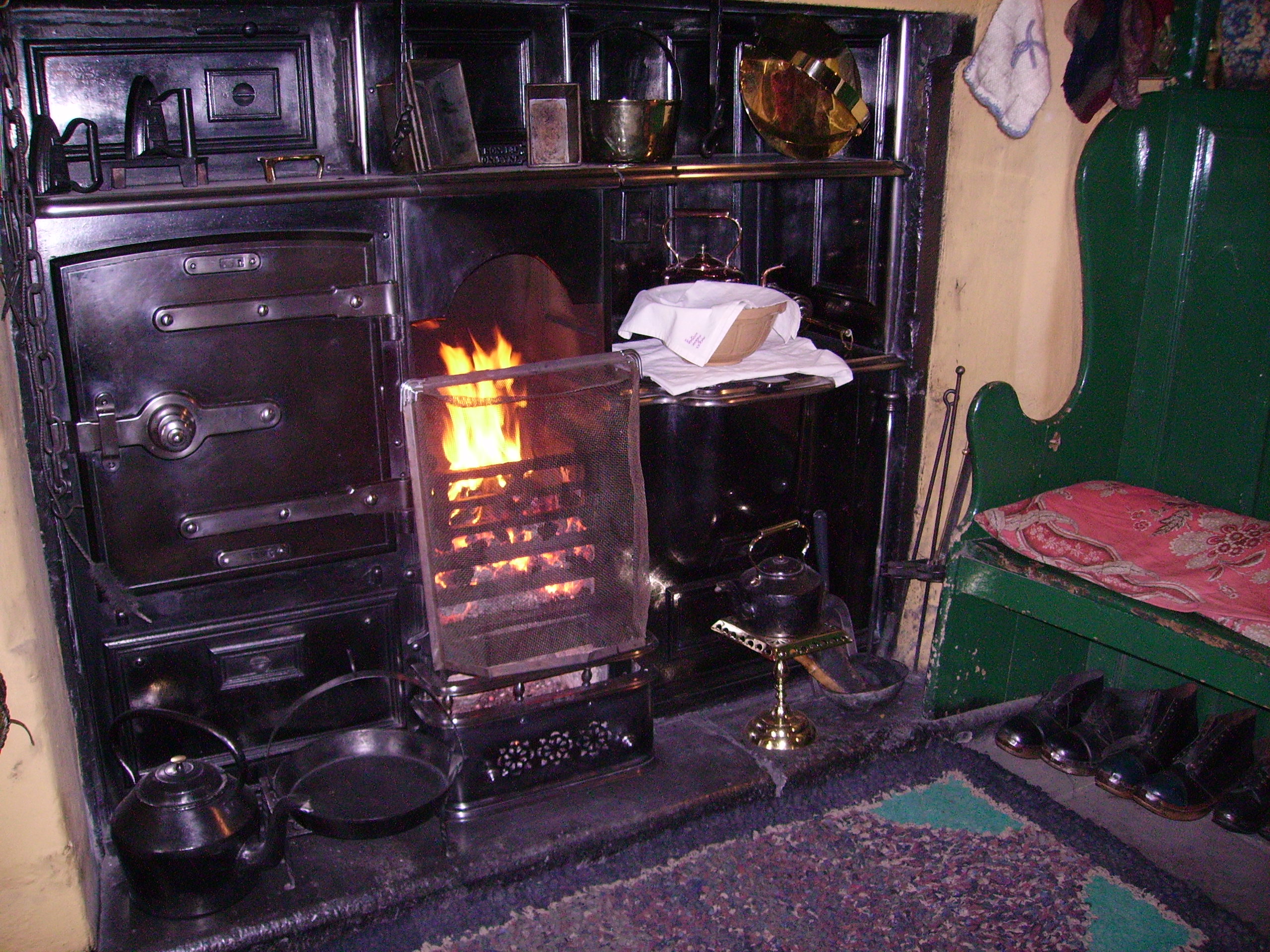
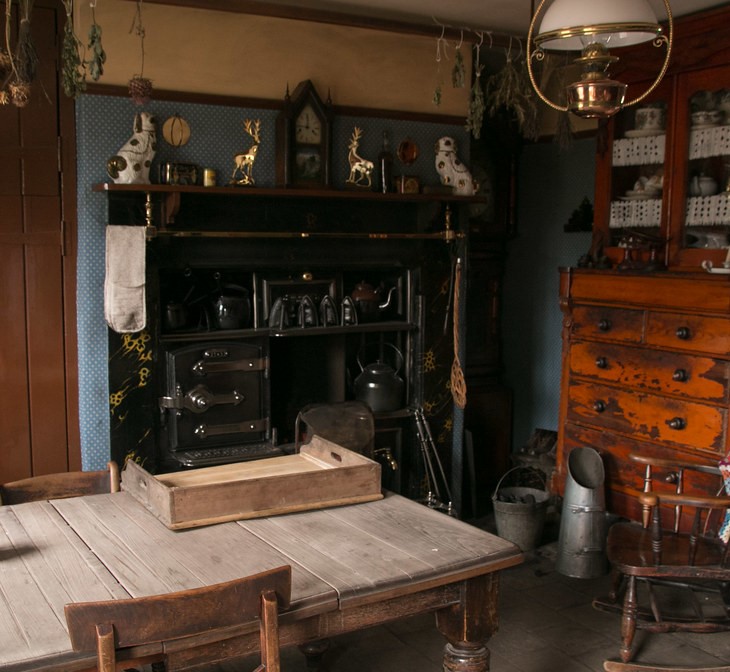
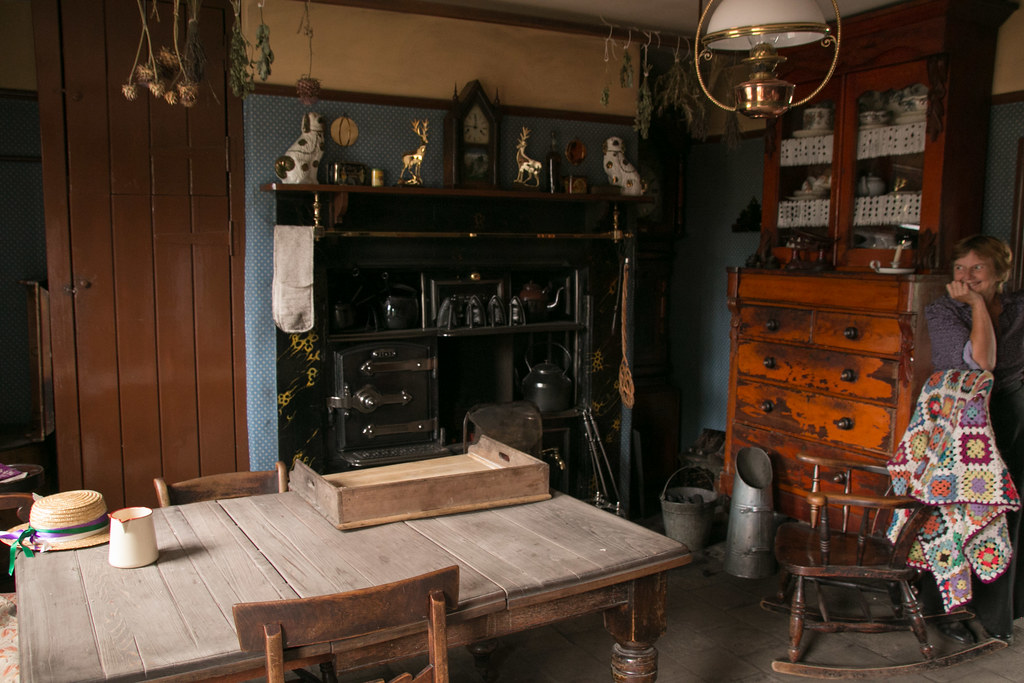
In most houses there was a range with a coal fired oven and open fire in the kitchen. Some ranges had a boiler. The range had to be black leaded and the tin plate fender polished until it was gleaming. This was usually women’s work.
On the back of the fire was a shelf that coal was thrown onto and raked forward to keep the fire going. If the fire went out in the night the kitchen was very cold.
Water for washing was boiled on the open fire. Bread and meat were cooked in the oven.
There was a big wooden table in the centre of most living rooms. The table was multi-purpose used for preparing food, baking, eating family meals, scrubbing clothes, preparing wall paper, and sewing.
Coal was the most common fuel in Doggie. This would be brought to each house by horse drawn cart or lorry usually once a month and tipped in the road in front of the house. Coal would be stored in a coal house that was often some distance away from the road. The family would have to shovel the coal into a barrow or bucket and take it to the coal house.
Coal fired chimneys filled with soot which had to be swept to avoid soot and smoke falling on food that was cooking over the fire. If the chimney wasn’t swept often enough it might set on fire. Few people needed a chimney sweep; most saw to it themselves. Newspapers were scrunched up and placed on the fire, the back door was opened to make a draught, the paper was lit. The lit paper went up the chimney and set fire to the soot that had collected in the chimney. The lit soot came through the chimney on fire. People waited to do this when rain was expected to avoid danger from firing the chimney. No one cleaned their chimney on wash days to avoid danger from cross women.
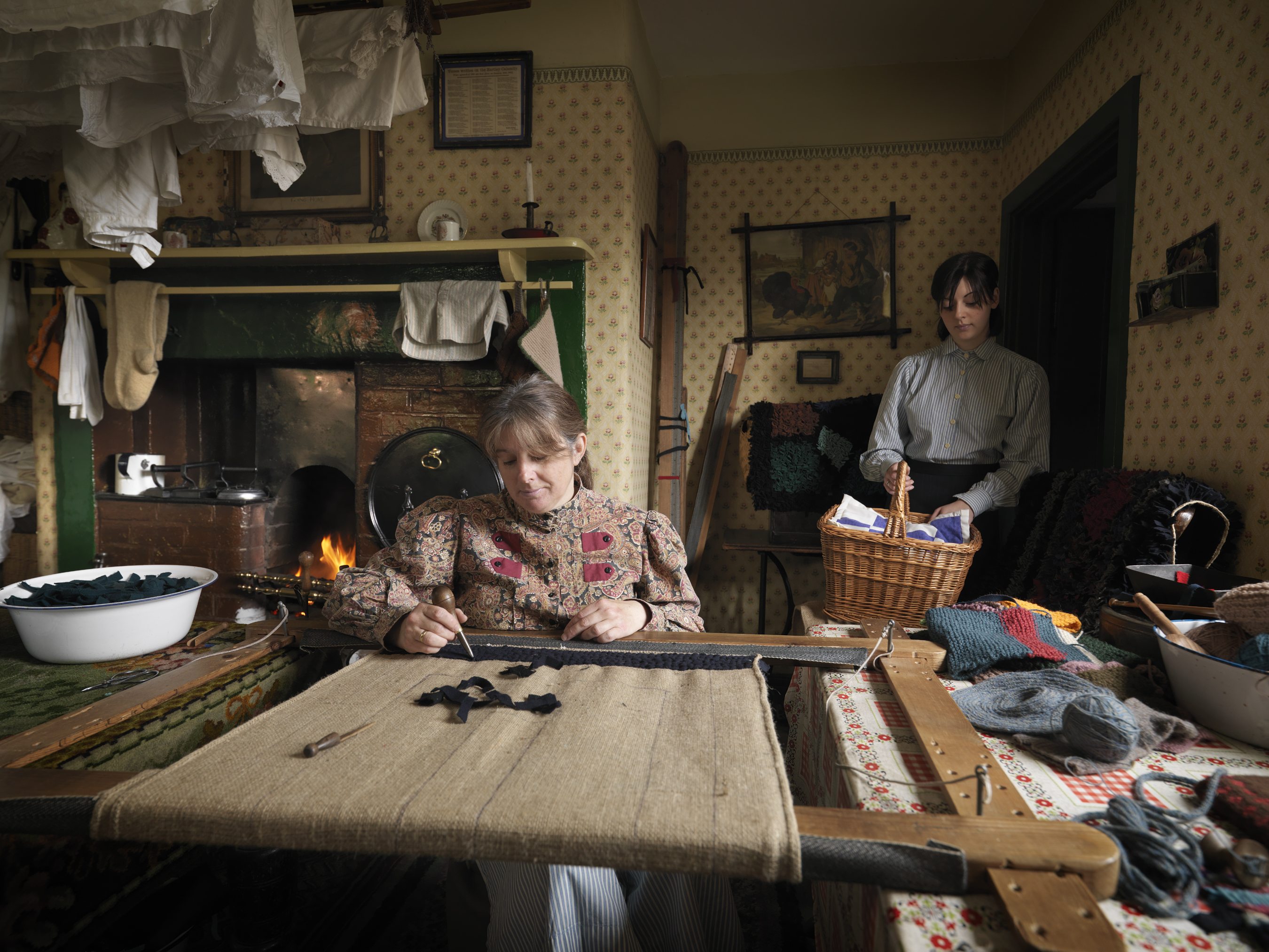
In the early days floors were fashioned from compacted earth or flagged. Many households made peg rugs from old worn out clothing that was cut into strips and progged or hooked onto harn sacking. Peg rugs were made by everyone in the family often in the evening by candlelight or gas. During the week a well-used rug was put in front of the fire. On Sundays the best rug replaced it. Families aimed to have new rugs ready for Christmas.
As time went on people put down linoleum and put mats on top. Coir matting, harn or wool carpet rugs were bought and used although proggy mats continued to be made. Mats, rugs and carpets were regularly taken outside where they were battered against a wall or hung over the line and hit with a carpet beater to get rid of the dust and dirt.
Clippy, Proggy and Hookey Mats
Advertisement Sunderland Daily Echo and Shipping Gazette 14 February 1947
RUG Mat Clippings – Whether you can make clippy or hookey mats we can supply you with all you require. Clippy from 15/6 per stone. Hookey from 25/- per stone. Write or call and we deliver them free. Also very long lengths in mixed and self colours, hessian, binding and prodders. Hookey and clippy mats in stock. Clipping Co. Whites Market Sunderland.
I can remember mam, aunty Peg, and aunty Annie making a clippy mat on a wooden frame that had been used for many years. We all sat round the frame in front of the stove. They made a pan of toffee after it was finished.
I remember my mam making a clippy mat too. The frame would go up after the shop shut. I left the last mat she made in the loft at our old house. I wish I had kept it.
Clippy mats yet another memory…lasted years.my father made our wooden frame. That had almost passed from memory.
There were four quite commonly used techniques; hooky, proggy, latch hook and locker hook. All household tools including those for rug making were made at the pit.
We must have made peg rugs – because as a child my tool was like a one legged dolly peg. I have heard them called peg rugs but not as common as clippy mats.
Cornforth Clippers started in the Church Hall on 21st September 2016 following the interest shown in this dialogue on Cornforth History.
The Back Yard
Houses built just before and just after the second world war usually had outside coal and wash houses. The lavatory was outside too. Those were the days. Oh dear.
My great aunt lived in a place where there was no flushing water, it went straight to the midden underneath it had a wood plank with a hole cut in the middle.
The midden man used to come and empty it so many times a year.
Would now be classed as eco loos.
At the time we classed it as normal it was also an experience going to my aunts a novelty really there were no smells as such my gran’s toilet was outside bottom of the yard.
Most were and some people shared it with their neighbours. As for air fresheners – the fresh winds sorted out bad smells.
I can’t remember the one we shared in Back George Street but I can remember that my aunt’s in Low Spennymoor looked like this.
My auntie Freda’s only had one hole she lived by the cemetery down on the Green scary going down there in the night.
There was one at White House Farm up the Hilly Holes too …… I remember the wooden seat was scrubbed almost white by aunty Dorothy always felt very warm to sit on …. I spent a lot of my school holidays up there with Jennifer and Douglas.
Flushing lavatories were a great improvement on earth closets even if they were still outside the house.
My gran’s toilet was like that. Our job was to cut the newspaper into squares put string through it and hang it on the nail!
My dad kept a paraffin heater in ours. If it got into minus double figures we were allowed to light it.
And Tilly lamps in the winter to stop them freezing up ….
Yes, I vaguely remember them Hardy Folk.
I was made to sit in ours to practice my recorder.
Northern Echo for toilet paper.
We used Radio Times in ours.
Distempered walls, carefully cut newspaper hung on string,
Some even had Izal toilet paper…how did that work?
Not well, always scratched yer bum.
A bucket upstairs for night time and a po under dad’s bed.
My grandparents had ‘goes under’ and a bucket in the bedrooms.
.
A woman’s work was never done.
Up until the late twentieth century most women’s time in Cornforth revolved round their menfolk; getting them out of bed on time, providing breakfast and bait (a packed lunch) for their men to take to work. The rest of the day women were kept busy shopping, cleaning the house and looking after children. They aimed to have a warm, clean home, hot bath and a substantial meal for the men when they got home.
Every day children had to be looked after, beds made, rooms tidied. floors swept, window sills and furniture dusted. Not many people had fridges. Fresh food needed to be bought daily. All meals had to be shopped for, or vegetables collected from the allotment then prepared and cooked.
Some jobs like washing, ironing, window cleaning, ‘Donkey Stoning’ the front step, baking, cleaning the bedrooms, stairs, landing, and the outside lavatory were done weekly. Evenings were spent ironing, sewing and mending.
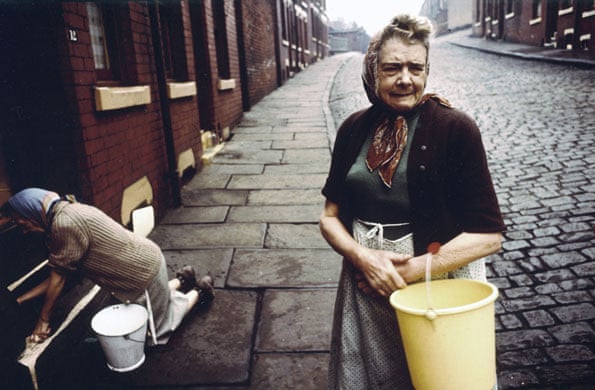
Having a clean front doorstep was very important for the house proud women. Steps were made to look smart by scrubbing it with soap and water and then while the step was still wet ‘ Donkey-stoning’. The donkey-stone was a tablet made by mixing ground stone-dust, cement, water and bleach, Quite a bit of elbow grease was required.
Some people also used a donkey stone to brighten the window bottom or window sill. The rag man came round with his horse drawn cart and gave donkey stones in exchange for old clothes.
Big cleans took place in the spring and winter when rooms were bottomed, cupboards turned out, carpets beaten, paintwork and curtains washed.
Women seemed to wear an apron throughout the day. There was always something to do.
Women did work outside the home up to, and after they married but attending to their husband, children and keeping house was usually considered a married woman’s first responsibility. Work inside the home was very demanding, with few mod cons. Women who worked outside the home still had to look after their homes and family.
Most men in the village worked at the pit. Miners’ wives had a very demanding role. Their men worked long, hard, shifts doing physically demanding work in dirty conditions. The men needed a hot meal before they left for work, something to eat to take with them while they worked and when they returned home they were much in need of a bath, clean clothes and a hot meal.
A miner’s working pattern could be irregular, requiring support at home at any time of the day or night. This was further complicated if there were several men working at the pit from one household on different shifts; each would need to be fed, bathed and sleep undisturbed at different times.
Until the pit head baths were built in the mid 1950s miners arrived home in their work clothes, covered in coal dust and in need of a bath. Tin baths hung in the scullery or on the back door. It usually fell to the woman of the house to bring the bath into the kitchen, place it in front of the fire and fill it with hot water from the coal fired boiler at the side of the range or ladle it out of a pan simmering on the fire.
My mother moved into the family home after my grandmother died to look after her three brothers; all miners. I remember them filling the tin bath in front of the fire.
Many people describe helping scrub their father’s back. Carbolic was the soap of choice. It is a widely held belief that miners did not wash their backs as they thought washing would weaken them. The soapy water from the bath would be tipped out on the back step to run into the sink in soapy rivulets streaked with coal dust. Residue scum was sluiced away.
The pit baths made a huge difference. All the coal dust was left where it belonged.
For all women, wherever the men of the house worked, looking after the family and the home was an endless round of cleaning, shopping and cooking. The working day for men was long but it was longer for women. Up until the 1950s many homes did not have hot running water, bathrooms, or inside lavatories and all meals were cooked from scratch.
Family members bathed once a week often on Sunday or Friday. Children had their hair washed and ‘fine tooth combed’. Children were changed into clean vests and knickers for Sunday or the start of the school week. .
The rest of the family bathed once a week often on Sunday or Friday. Children had their hair washed and tooth combed and changed into clean vests and knickers for the weekends.
The baths used for bathing were multi-purpose. Some baths had a hinged lid which was used for scrubbing clothes on washday.
Washday was a big event and often took the woman of the house the whole of Monday.
The washing was done in a boiler and wash tub with a range of containers used for rinsing clothes. Most people had a mangle to squeeze out excess water. Early mangles were free standing with wooden rollers; later more forgiving rubber rollers came into being. In the twentieth century some people had a washing machine which was stored either in an outside wash house or kept in the scullery with its legs sticking out.
I remember when the council houses were built in the 50s all were built with wash houses and coal houses and had a free electric boiler.
Feeding The Family
In the late nineteenth century and into the twentieth century sculleries may have had a pantry with a stone slab for keeping things cool and storing food. Some mothers locked the pantry. Food was precious.
Most people had a vegetable patch that fed the family. Families kept hens, ducks, goats and pigs in the garden. Pigs were fattened up on neighbours’ peelings and waste food mixed with bran. Pigs were collected towards the end of the year and taken away for slaughter, curing and processed into bacon, ham, chops, sausages and black pudding. Bacon was hung anywhere they could find a hook and sliced as and when needed.
Produce was shared and exchanged. If someone had a good crop of new tomatoes they would be exchanged. ‘I am baking tomorrow I will bring some over’.
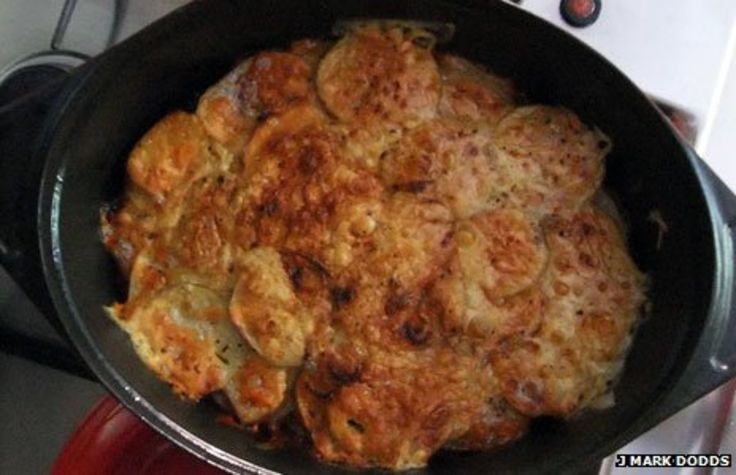
Everything was cooked over the fire and the pans were always black on the outside and shiny inside. Cooking took a long time and the smell filled the house. Sweet and savoury suet puddings made in a tied rag were common. Meat, leek, onion, spotted dick, jam roly poly, treacle were favourites. ‘Modern comfort food’
Men went to work with bait or snap. They had special tins to hold jam sandwiches, and drank water and cold tea.
By the mid twentieth century fewer families were self sufficient and relied upon the various shops in the village for their provisions. Not many families had a fridge which was why shopping was necessary every day.
Sunday Dinnerwas usually eaten in the middle of the day. Some people call this lunchtime. It was dinner time in our house. We had tea at tea time which was late afternoon early evening. We didn’t have lunch or at least we didn’t call it lunch. Dad might have a beer with his dinner and if mam and us kids were lucky we might have a splash of beer in the lemonade. For most people lemonade was reserved for Sundays. The beer might have been collected from a pub’s off sales in a jug.
Sunday Teawas often a treat that included boiled ham followed by tinned fruit and evaporated milk that was eaten with bread and butter.
Treats
Did you ever make cinder toffee or fudge? We loved making it but it was hard work eating it. Teeth breaking!! Ehh toffee my grandad would make it but got into bother off my grandma if she caught him.